FIBRE FIRST
Start from wholegrain
Most UK adults eat about 20 g of fibre a day against a 30 g goal. Porridge and wholemeal toast are easy places to close the gap.
See the numbers doodlebreakfast
00WHAT THE EVIDENCE SAYS
Less about when you eat, more about what is in the bowl.
Randomised trials have not found breakfast to be a weight-loss tool. What the evidence does support is simpler: more fibre, less free sugar and a small glass of juice, not a big one. Here is what the research and the NHS say, in plain English.
Plain English, with the sources linked.
Check your breakfast01Principles
02THE SHORT ANSWER
Trials found no magic in the timing.
The fibre and sugar guidance is clearer.
FIBRE FIRST
Most UK adults eat about 20 g of fibre a day against a 30 g goal. Porridge and wholemeal toast are easy places to close the gap.
See the numbersSUGAR SECOND
Adults should have no more than 30 g of free sugars a day, and juice counts. Frosted cereals and big glasses add up fast.
Check your bowlTHE SKIPPING DEBATE
Randomised trials found no weight advantage to eating breakfast. It is a matter of appetite and routine.
See the trialsGeneral information only, not medical advice. For advice about your own health, speak to a doctor, pharmacist or other qualified health professional.
03A QUICK BOWL CHECK
Pick the breakfast closest to yours. Each note comes from NHS guidance on fibre, sugar and 5 A Day, or from the breakfast trials below.
This is a general guide, not personal dietary advice. People with a medical condition or special diet should follow their own clinician's advice.
04TWO STUDIES WORTH KNOWING
When researchers randomly assigned breakfast,
the weight benefit did not appear.
+260 kcal a day
Extra energy eaten by breakfast eaters
A review of 13 randomised trials found breakfast eaters ate about 260 kcal more a day and weighed 0.44 kg more on average. The authors concluded that adding breakfast might not be a good strategy for weight loss.
BMJ REVIEW · 2019
No change in body mass
Six weeks of breakfast versus fasting until noon
Lean adults who ate breakfast took in about 539 kcal a day more, but also burned about 442 kcal a day more through physical activity. Body mass did not differ between the groups.
UNIVERSITY OF BATH · 2014
Neither study says breakfast is bad. They show that the old claim, that skipping it makes you gain weight, does not hold up in controlled trials.
05TRY IT TOMORROW
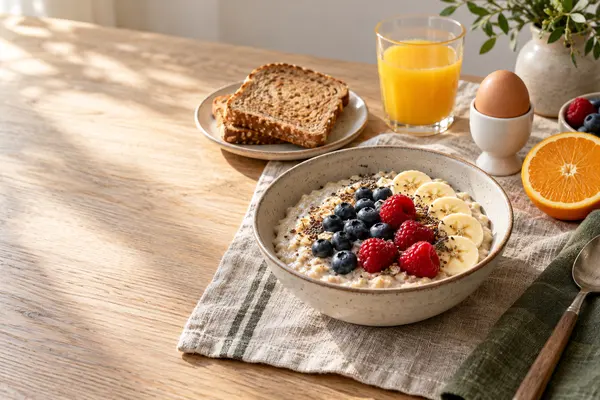
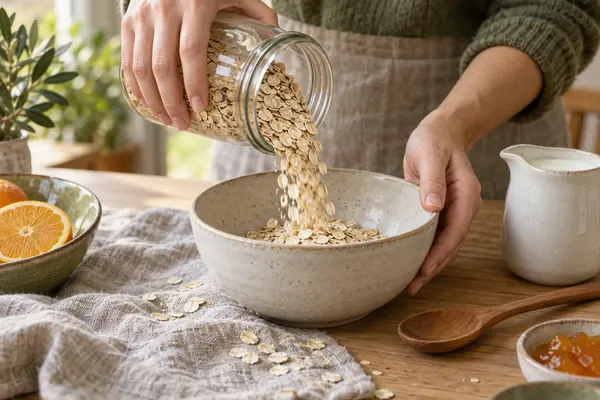
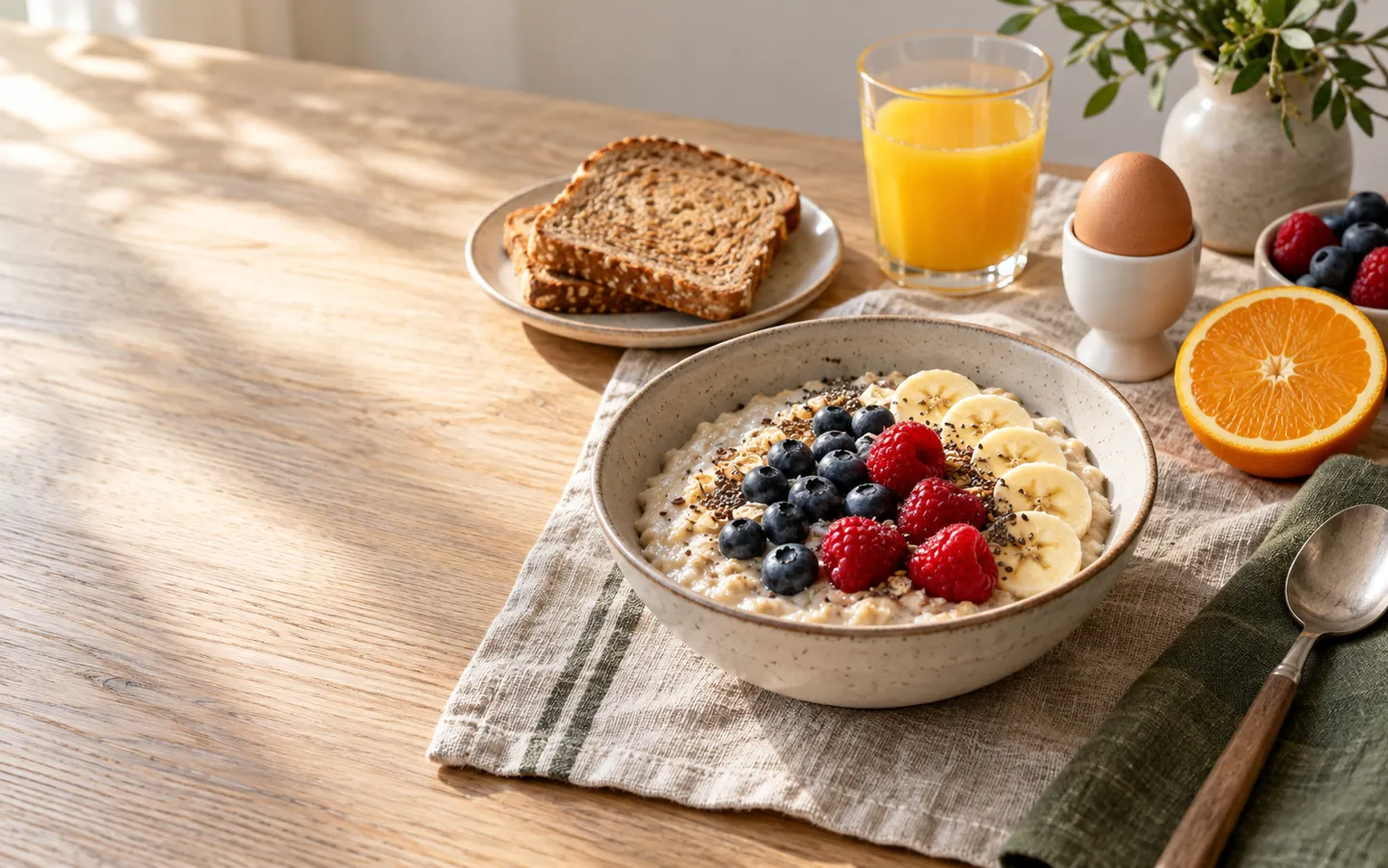
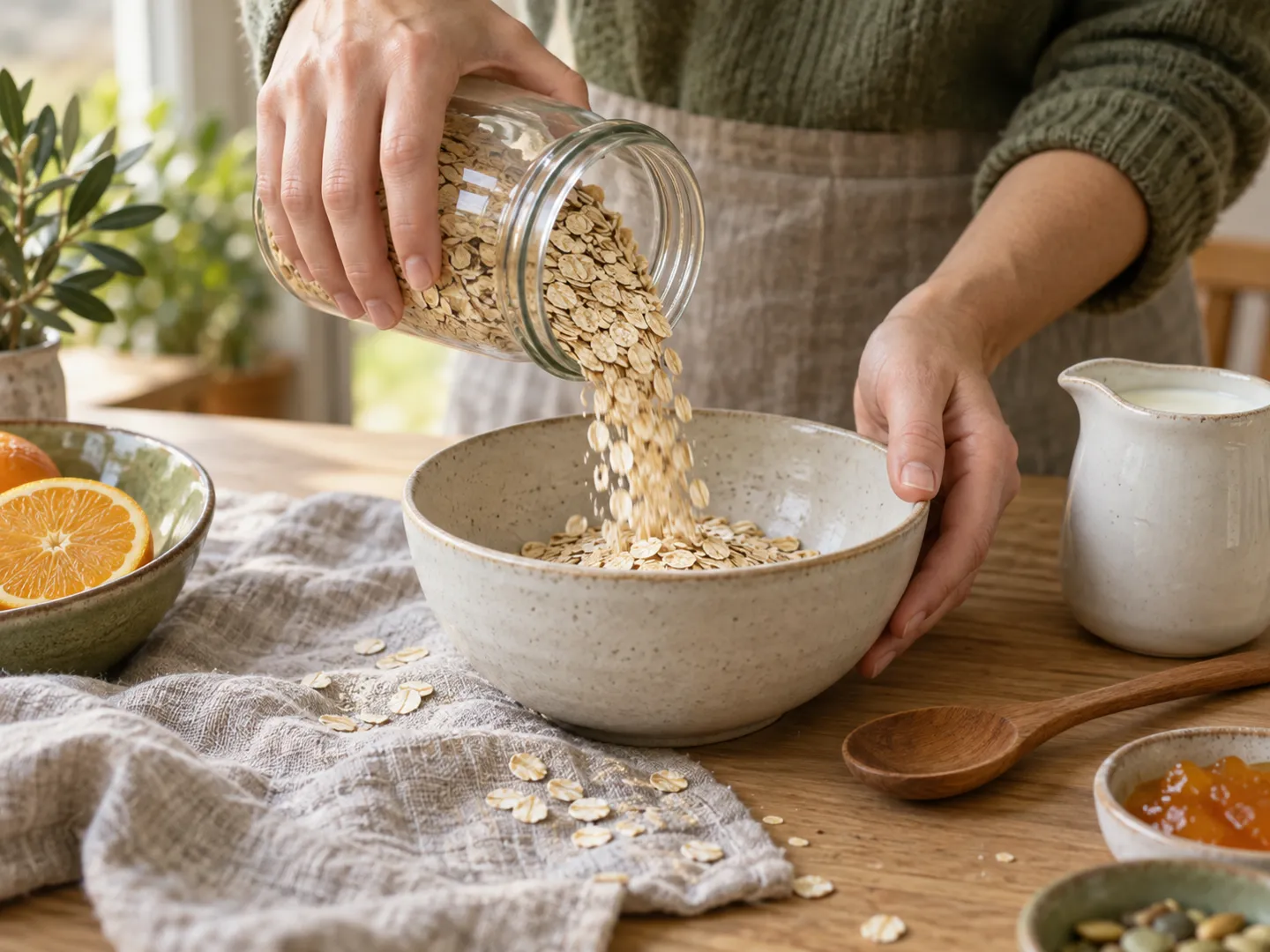
Porridge, plain wholewheat biscuits, plain shredded wholegrain or wholemeal toast are the higher-fibre options the NHS suggests.
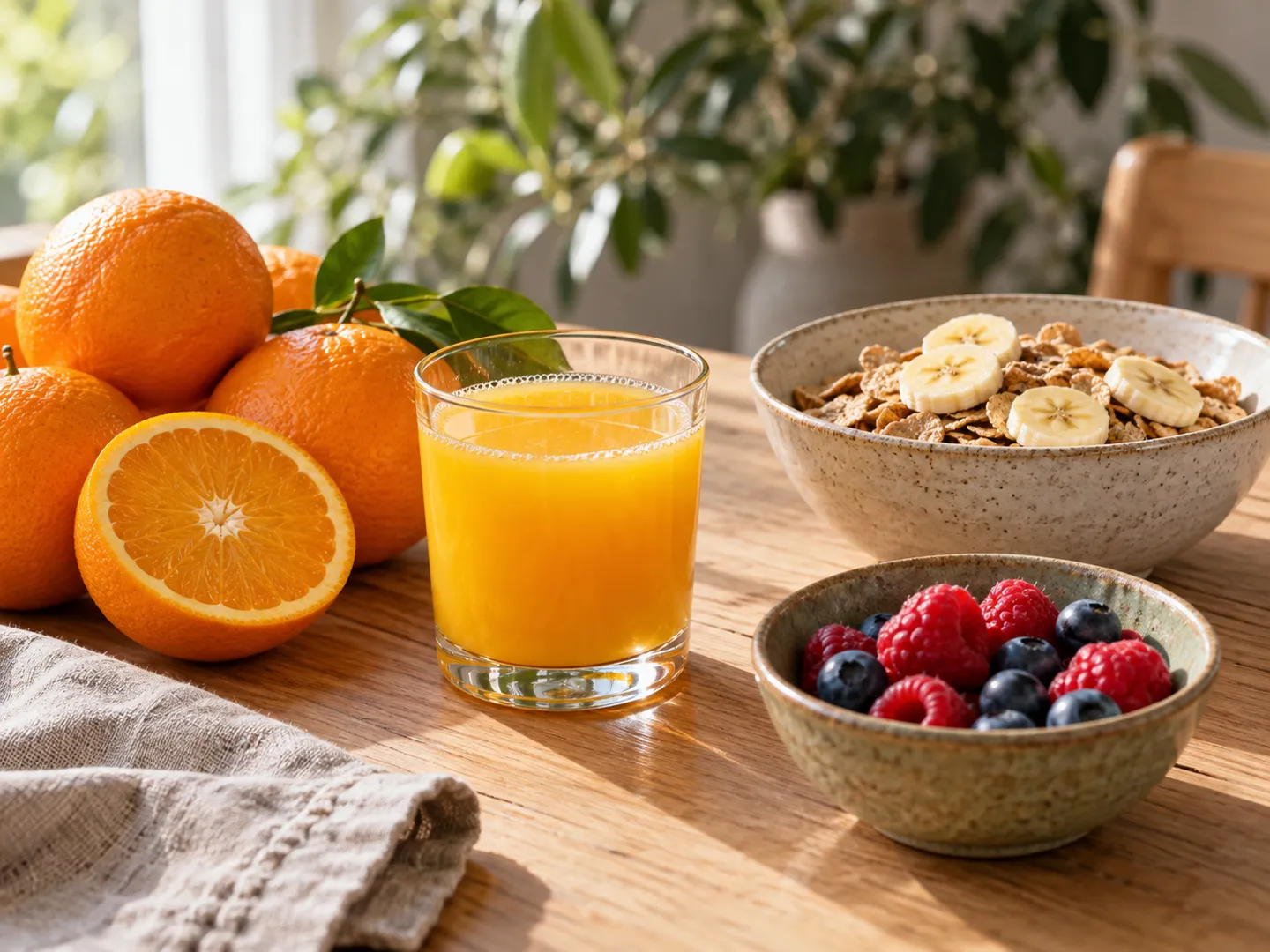
Sliced banana, berries or a little dried fruit add sweetness. 30 g of dried fruit counts as one of your 5 A Day; eat it with the meal.
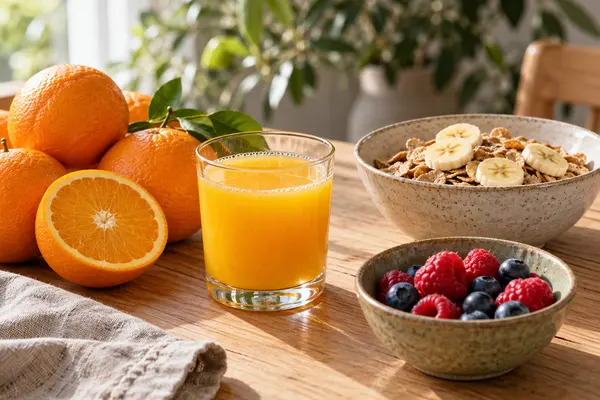
If you like juice, keep it to about 150 ml and drink it with breakfast rather than as a snack later.
The trials do not show that breakfast itself helps or harms weight, so fit it to your appetite and your morning.
06BREAKFAST FACTS
UK guidelines say adults should eat 30 g of fibre a day. The NHS says most adults manage only about 20 g.
The NHS example: two slices of wholemeal toast with peanut butter, followed by a medium orange, gives around 8.3 g of fibre.
Adults should have no more than 30 g of free sugars a day, roughly seven sugar cubes. Sugar in juice and smoothies counts as free sugar.
Unsweetened juice and smoothies count as one portion of your 5 A Day at most. The advice is a combined total of 150 ml a day, with a meal.
In 2010 the European Food Safety Authority found that oat beta-glucan lowers LDL cholesterol, for foods providing at least 3 g of it a day.
07QUICK QUESTIONS
Short answers to the questions people ask most.
The trials do not support a special status. A 2019 BMJ review of 13 randomised trials found that adding breakfast was not a good strategy for weight loss, and a six-week University of Bath trial found no difference in body mass between eating breakfast and fasting until noon.
Not in the trials so far. In the 2019 BMJ review, people who ate breakfast weighed on average 0.44 kg more by the end and ate about 260 kcal more a day. The authors noted the trials were short and of variable quality.
There is no breakfast target, but UK guidelines say adults should eat 30 g of fibre a day, and most manage about 20 g. The NHS says two slices of wholemeal toast with peanut butter and a medium orange give around 8.3 g.
Unsweetened juice counts towards your 5 A Day, but only ever as one portion. The NHS advice is to keep juice and smoothies to 150 ml a day in total and to have them with a meal, because they are sugary.
The European Food Safety Authority concluded in 2010 that oat beta-glucan lowers LDL cholesterol, and that the claim applies to foods providing at least 3 g of oat beta-glucan a day. Check the label of your oats for the amount per serving.
08Sources
A NAME FOR THE MORNING
doodlebreakfast.com is part of the DoodleSale portfolio. It isn't in an auction right now, but you can ask about leasing it.